

Hydrating vs Clarifying Primer: How to Choose the Right One for Your Client
Teilen
The Step Most Artists Rush (But Shouldn't)
If you've ever had a client come back with retention issues and you can't figure out why — primer is often the first place I look. It's one of the most underrated steps in the lash application process, and choosing the right primer for each client makes a significant difference to how long their set lasts.
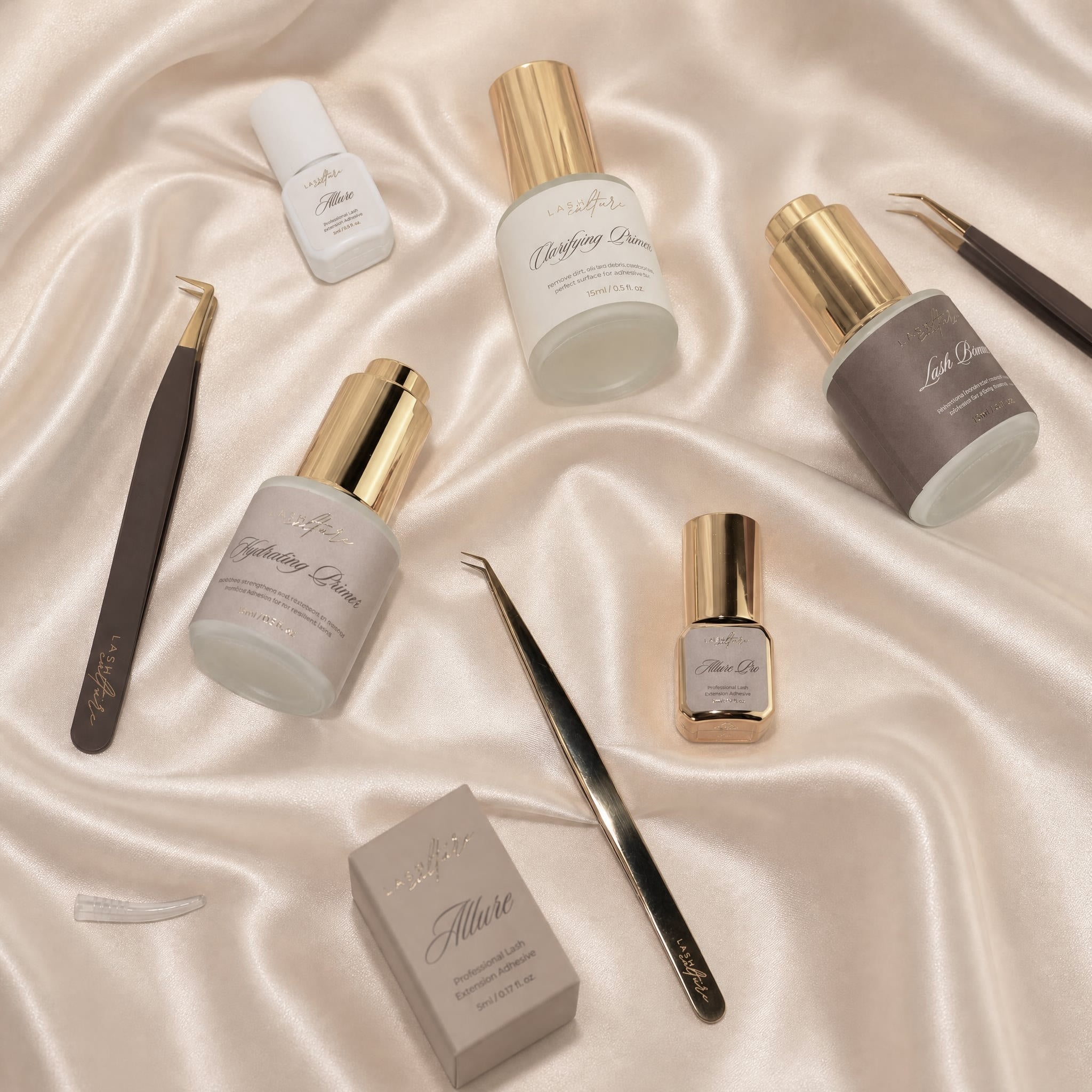
At Lash Culture, we offer two primers for a reason: the Hydrating Primer and the Clarifying Primer. They're not interchangeable — and knowing when to use each one is a skill every lash artist should have.
What Does Primer Actually Do?
Before we get into which to choose, let's quickly cover the purpose of primer. Lash primer prepares the natural lash for adhesive bonding by:
- Removing oils, dust, and residue from the lash surface
- Balancing the pH of the natural lash
- Creating an optimal surface for the adhesive to grip
Without proper priming, even the best adhesive won't perform at its best. Think of it like painting a wall — prep work determines the finish.
Clarifying Primer: When to Use It
The Clarifying Primer / 15ml is your go-to for clients with oily lashes or skin. It works by deeply cleansing the lash surface and removing excess oil that would otherwise interfere with adhesive bonding.
Use clarifying primer when your client:
- Has medium to low porosity natural lashes
- Has naturally oily skin or an oily T-zone
- Tends to have poor retention despite good aftercare
- Sweats heavily or lives in a humid climate
- Has fine, slippery lashes that are difficult to work with
- Is coming in for a fill with visible oil buildup on existing extensions
Clarifying primer is formulated with a higher pH than the natural lash, causing the cuticle of even the lowest porosity natural lash to open up, giving your adhesive something to grip on to.
Hydrating Primer: When to Use It
The Hydrating Primer / 15ml is formulated for clients with dry, brittle, or dehydrated lashes. Rather than stripping the lash, it adds a light layer of moisture that helps the adhesive cure more evenly and bond more effectively. When adhesive meets a highly porous lash, it often grips too quickly; resulting in incorrect attachment (leading to poor retention) and incorrect direction (leading to messy looking sets)
Use hydrating primer when your client:
- Has dry, coarse, or brittle natural lashes
- Is experiencing lash shedding or breakage
- Has been through hormonal changes (pregnancy, menopause) that affect lash texture
- Lives in a very dry or air-conditioned environment
- Has previously had lash damage from poor removal or over-processing
Hydrating primer is also a thoughtful choice for mature clients whose lashes tend to be finer and more fragile.
Can't Decide? Start lashing and then course correct
The best way to choose is to assess the lashes before you start. Run a clean spoolie through the natural lashes and observe:
- Lashes slipping and sliding? Not staying upright? → Clarifying Primer
- Lashes attaching too quick? No time to correct direction? Getting lifted or incorrectly attached bases? → Hydrating Primer
- Are they somewhere in between? → Leave it alone! You don’t always need a primer if the lashes are attaching perfectly.
If you want to stock both and offer a complete prep routine, our Priming Duo is a great way to have both on hand — and it's a popular choice among the artists I train.
Application Tips for Both Primers
- Apply primer to a microfibre brush or lint-free applicator — never directly to the lash
- Apply at the root of the lash — right where our adhesive goes
- Allow primer to fully dry before applying adhesive — this is non-negotiable
- Use a small amount; more is not better with primer
The Bottom Line
Primer isn't a one-size-fits-all product, and treating it that way is one of the most common mistakes I see in new artists. Taking 60 extra seconds to assess your client's lash type and choose the right primer can be the difference between a set that lasts two weeks and one that lasts four.
Want to learn more about lash prep, adhesive science, and retention strategies? Our training courses cover all of this in depth — come learn with us.